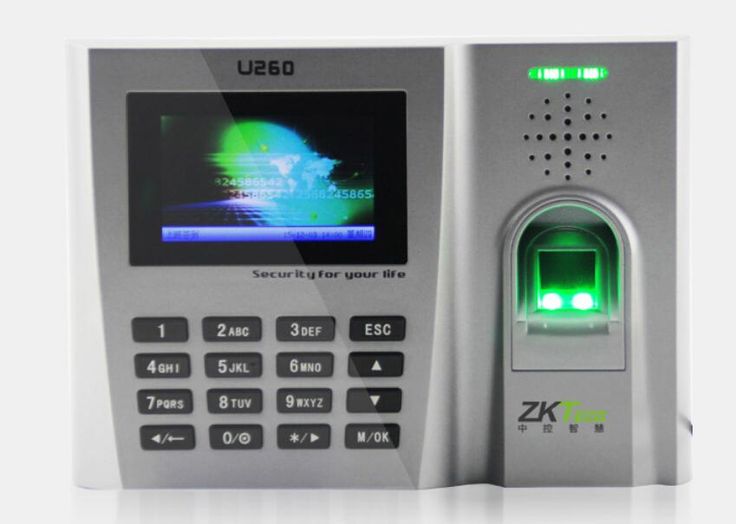
Biometric Time Attendance Systems
1. Introduction
In Kenya, businesses and institutions face challenges in managing employee attendance, tracking work hours, and preventing fraud. Traditional methods like manual registers, punch cards, and RFID-based systems are prone to manipulation and errors.
Biometric...
Notify Me
This item is currently out of stock. Enter your details below to be notified when it's back in stock.
Request a Quotation
Provide your details below, and we will get back to you with a customized quotation.
In Kenya, businesses and institutions face challenges in managing employee attendance, tracking work hours, and preventing fraud. Traditional methods like manual registers, punch cards, and RFID-based systems are prone to manipulation and errors.
Biometric Time Attendance Systems offer a modern, automated, and foolproof solution by using unique biological traits such as fingerprints, facial recognition, iris scans, or palm veins to authenticate employee identity and track attendance. These systems are widely used in corporate offices, government institutions, factories, schools, hospitals, and retail businesses for workforce management, payroll integration, and security enforcement.
2. How Biometric Time Attendance Systems Work
Biometric systems work by capturing and storing an employee’s biometric data (e.g., fingerprint, face, or iris pattern) and comparing it to stored records for authentication when they clock in or out.
2.1 Steps in Biometric Attendance Recording:
Enrollment: The system records an employee’s biometric data (fingerprint, face, or iris).
Verification: During check-in/check-out, the system scans the biometric trait.
Authentication: If a match is found, attendance is logged in the system.
Data Storage: The attendance data is stored and can be integrated with payroll software.
3. Types of Biometric Time Attendance Systems in Kenya
3.1 Fingerprint-Based Attendance Systems
Most common and affordable biometric attendance solution.
Employees scan their fingerprint to clock in/out.
Highly accurate but may not work well for individuals with dirty, wet, or worn fingerprints (e.g., construction workers).
3.2 Facial Recognition Attendance Systems
Uses an AI-powered camera to recognize and authenticate an employee’s face.
Works well in high-security environments and for contactless authentication.
Suitable for corporate offices, hospitals, and industrial sites.
3.3 Iris Recognition Attendance Systems
Captures unique iris patterns to verify identity.
Highly secure and works in any lighting condition.
Used in government offices, research institutions, and high-security zones.
3.4 Palm Vein Recognition Systems
Uses infrared technology to scan the unique vein patterns in an employee’s palm.
More secure than fingerprints and works even if hands are dirty or wet.
Ideal for factories, healthcare institutions, and mining sites.
4. Key Features of Biometric Time Attendance Systems
4.1 Real-Time Data Tracking
Instant attendance recording and remote monitoring capabilities.
4.2 Cloud-Based Integration
Stores attendance records on the cloud for remote access and integration with payroll software.
4.3 Multi-Biometric Authentication
Supports multiple biometric options like fingerprint + facial recognition for higher security.
4.4 Anti-Spoofing Technology
Prevents fraudulent access using fake fingerprints or facial masks.
4.5 Reporting & Analytics
Generates detailed attendance reports, late arrivals, and absenteeism tracking.
5. Benefits of Biometric Time Attendance Systems in Kenya
5.1 Eliminates Time Theft & Buddy Punching
Employees cannot fake attendance using another person’s fingerprint or face.
5.2 Accurate Payroll Management
Reduces payroll errors by automatically calculating work hours.
5.3 Enhanced Security
Restricts unauthorized access to office premises.
5.4 Increased Efficiency
Saves time by automating attendance tracking and HR operations.
5.5 Scalable for All Business Sizes
Works for small businesses, SMEs, and large enterprises.
6. Best Biometric Time Attendance Systems in Kenya
6.1 ZKTeco Biometric Time Attendance Systems
Offers fingerprint, facial, and palm recognition solutions.
Cloud-based attendance tracking with ZKBioTime software.
6.2 Hikvision Biometric Attendance Systems
Advanced facial recognition with AI technology.
Integrates with CCTV security and access control systems.
6.3 Suprema Biometric Attendance Solutions
High-end fingerprint and iris recognition solutions.
Used in corporate and high-security environments.
7. Installation and Setup Guide
7.1 Steps for Installing a Biometric Attendance System
Choose the right biometric system based on employee size and business needs.
Install the device at entry/exit points.
Connect to power and network for real-time data tracking.
Enroll employees by recording fingerprints or facial data.
Integrate with payroll software for automated salary calculations.
8. Factors to Consider When Choosing a Biometric System
8.1 Business Size & Employee Count
Small businesses (10-50 employees) → Fingerprint-based system
Large enterprises (1000+ employees) → Facial or iris recognition system
Mid-range: Hikvision facial recognition systems (~Ksh 50,000 - 150,000)
High-end: Suprema iris recognition systems (~Ksh 150,000+)
9. Challenges of Biometric Attendance Systems in Kenya
9.1 Initial Installation Cost
Some biometric systems require a higher upfront investment.
9.2 Privacy Concerns
Employees may hesitate to share biometric data due to data security concerns.
9.3 Maintenance & Technical Issues
Requires regular software updates and sensor cleaning.
10. Future Trends in Biometric Attendance Systems
10.1 AI-Powered Facial Recognition
Machine learning algorithms for faster and more accurate authentication.
10.2 Cloud-Based Biometric Systems
Real-time remote access and cloud storage for data security.
10.3 Multi-Modal Biometric Authentication
Combining fingerprint + face + iris for maximum accuracy.
11. Conclusion
Biometric Time Attendance Systems are transforming workforce management in Kenya by enhancing security, eliminating attendance fraud, and integrating payroll automation. Businesses should choose a system based on employee size, security needs, and budget to ensure optimal performance and efficiency.